
ABDM Compliance Guide: How to Build an Ayushman Bharat Digital Mission Ready Health-Tech App in India
Navigate India's digital health landscape with confidence. Master ABDM compliance, secure API integration, and architectural best practices to build future-ready health-tech applications.
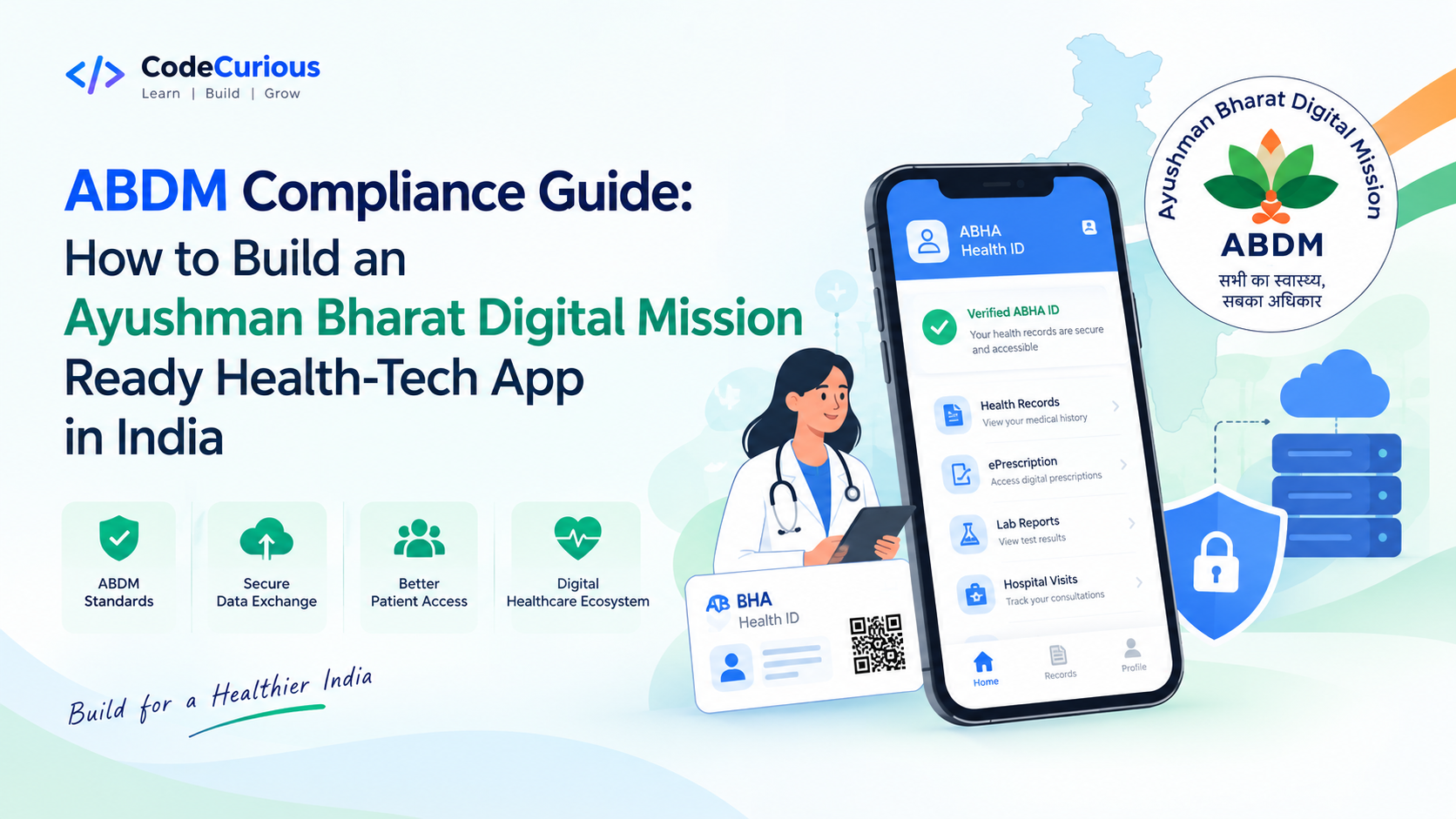
Overview
India's healthcare sector is undergoing a massive digital transformation driven by the Ayushman Bharat Digital Mission (ABDM). For health-tech founders, CTOs, and full-stack engineering teams, building an ABDM-compliant application is no longer optional—it is the foundational prerequisite for interoperability, trust, and market access in the world's most populous nation. The ecosystem aims to bridge the digital divide among various stakeholders in healthcare providers across the country through a digital backbone.
Key Insights
Achieving seamless ABDM integration requires a deep understanding of India's digital public infrastructure (DPI) and adherence to strict data privacy frameworks. Key components include:
- Adoption of the Ayushman Bharat Health Account (ABHA) for universal patient identification.
- Utilization of the Healthcare Professionals Registry (HPR) and Health Facility Registry (HFR).
- Implementation of consent-based data sharing architectures using the Health Data Locker framework.
- Strict adherence to end-to-end encryption standards for PHI (Protected Health Information) in transit and at rest.
Implementation & Architecture
Building an ABDM-ready health-tech application demands a robust full-stack architecture. At CodeCurious, we recommend microservices-based architectures deployed on cloud infrastructure that comply with local data residency requirements. Your backend engineering team must integrate the Unified Health Interface (UHI) APIs, which act as the open protocol for digital health services. This involves setting up secure RESTful webhooks to handle real-time consent artifacts issued by users via the Consent Manager. Furthermore, database schemas must be mapped to FHIR (Fast Healthcare Interoperability Resources) standards to ensure seamless data exchange with the National Health Authority (NHA) sandboxes during testing and deployment phases.
Conclusion & Next Steps
Navigating ABDM compliance accelerates time-to-market while building deep user trust in India's expanding digital health economy. By partnering with experienced full-stack engineering firms like CodeCurious, you can bypass common architectural pitfalls and fast-track your sandbox-to-production journey. Ready to architect your ABDM-compliant health-tech solution? Contact our engineering team today to schedule an architectural assessment.
"Navigate India's digital health landscape with confidence. Master ABDM compliance, secure API integration, and architectural best practices to build future-ready health-tech applications."

Have A Challenging System To Build?
Let's Engineer It Together.
Partner with our senior engineering squad to architect high-concurrency mobile apps, SaaS platforms, and enterprise AI systems.