A comprehensive technical blueprint for building a low-latency live video streaming platform supporting 50,000+ simultaneous viewers with WebRTC, Go transcoding, and edge CDNs.
1. The Evolution of Live Video Protocols: WebRTC vs RTMP vs LL-HLS
Building a live video application in 2026 requires balancing two competing engineering constraints: concurrency scale vs broadcast latency.
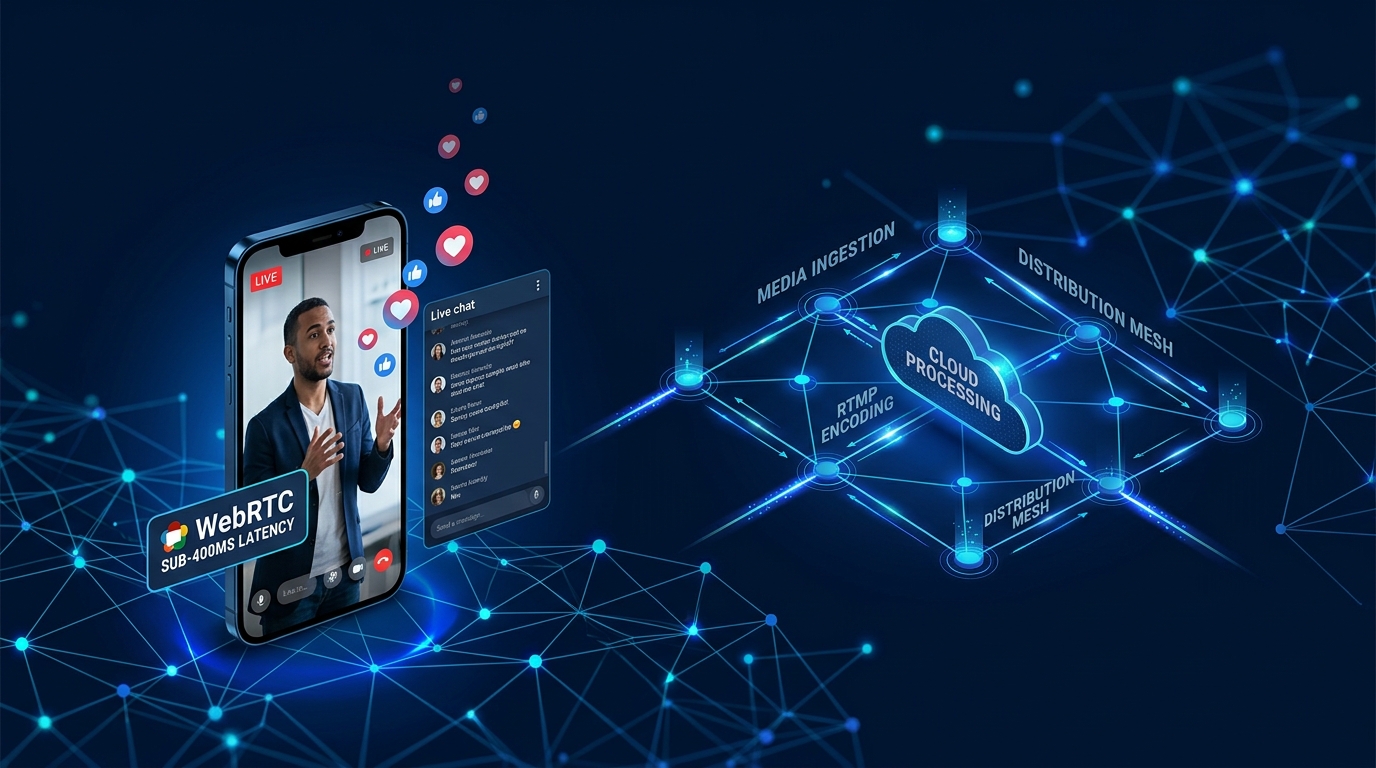
Traditional HLS video has 8–15 seconds of latency, which ruins live chat interactivity, sports betting, flash auctions, and creator tipping. WebRTC achieves sub-400ms latency, while Low-Latency HLS (LL-HLS) scales effortlessly to millions of viewers over global CDNs.
2. High-Performance Video Ingestion & Transcoding Pipeline
A production video pipeline follows 4 distinct stages:
- Ingestion: Creators broadcast video via RTMP/RTMPS (OBS Studio) or WebRTC (mobile camera) into edge servers located in Mumbai, Singapore, and Frankfurt.
- Real-Time Transcoding: High-performance Golang microservices running hardware-accelerated FFmpeg (NVENC) slice the master feed into 1080p, 720p, 480p, and 360p adaptive bitrate (ABR) ladders.
- Edge CDN Distribution: Video chunks are cached on 250+ Cloudflare/AWS CloudFront edge nodes so viewers download segments from the closest server.
- Interactive State & Chat Sync: WebSockets and Redis pub/sub synchronize polls, gifts, and chat messages with exact video frame timestamps.
Frequently Asked Questions
How much does it cost to build a custom live streaming app?
▾
A complete live streaming MVP supporting 5,000 viewers typically costs between ₹8 Lakhs and ₹18 Lakhs. A 50,000+ viewer enterprise platform with auto-scaling Kubernetes nodes ranges from ₹20 Lakhs to ₹38 Lakhs.
How do you keep cloud bandwidth egress costs low?
▾
By optimizing chunk durations (0.5s chunks), leveraging edge CDN tokenized caching, and utilizing Tier-1 multi-CDN routing switches that prevent expensive single-vendor lock-in.
![How Much Does It Cost to Build an App in India? [2026 Complete Guide]](../assets/blog-app-cost.jpg)